




Tinubu Reshuffle Cabinet: Edun, Dangiwa Exit as Presidency Confirms Voluntary Resignations
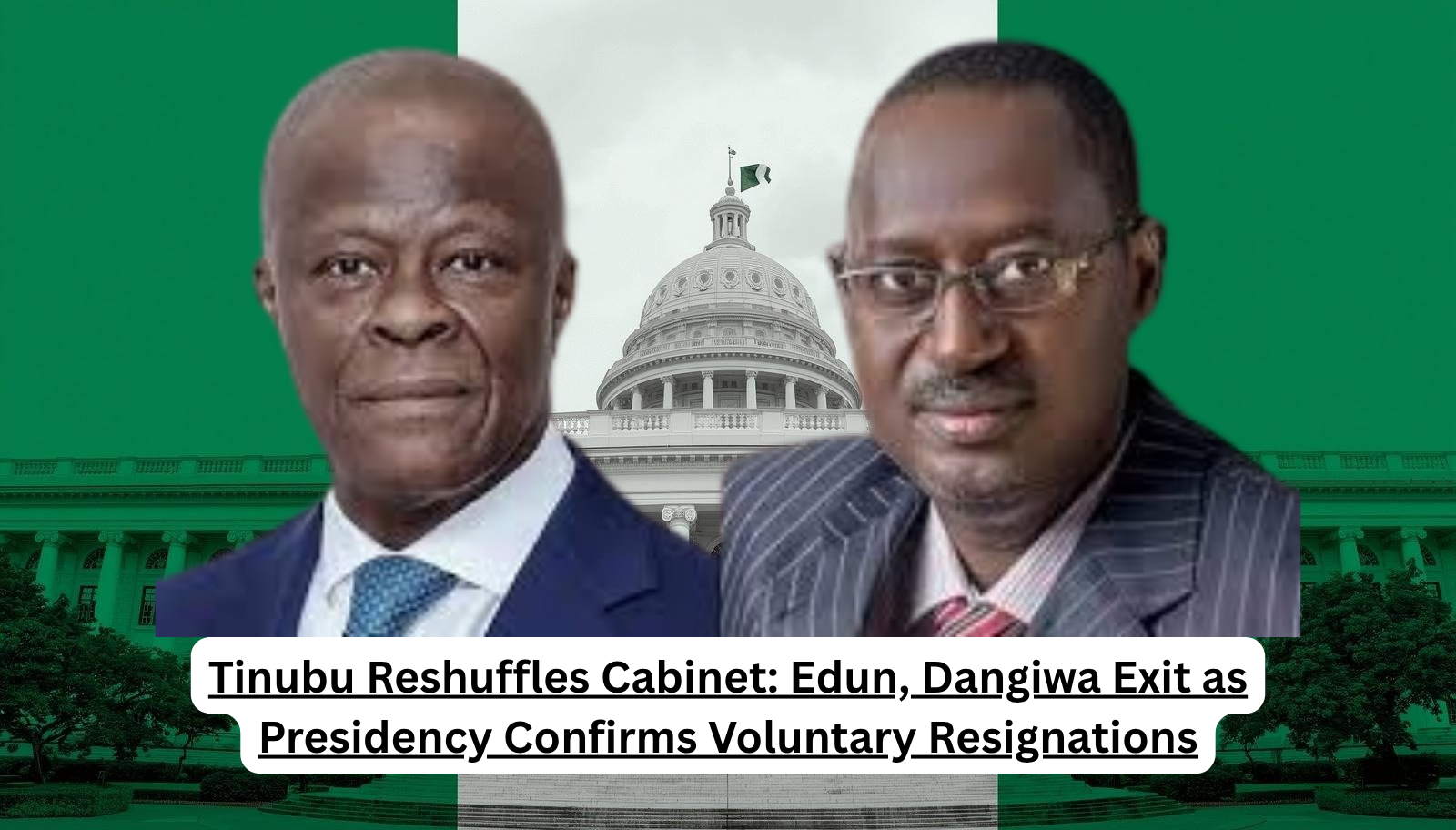
President Bola Tinubu has carried out a minor cabinet reshuffle, accepting the resignations of Finance and Coordinating Minister of the Economy Wale Edun and Minister of Housing and Urban Development Musa Dangiwa, the presidency confirmed on Thursday.
In a statement signed by the special adviser to the president on information and strategy, Bayo Onanuga, the presidency clarified that both ministers “tendered their resignations voluntarily, which the president has accepted with gratitude for their service.”
“The President wishes to commend Ministers Wale Edun and Musa Dangiwa for their dedication and contributions to the Renewed Hope Agenda during their tenure,” the statement read. “Their resignations are part of the normal administrative adjustments that occur in the course of governance.”
Key Changes and Succession Speculation
While the presidency has not yet formally announced replacements, multiple credible sources indicate that Taiwo Oyedele, chairman of the Presidential Committee on Fiscal Policy and Tax Reforms, is being considered to succeed Wale Edun as finance minister.
Oyedele, a respected chartered accountant and tax policy expert, has led high-profile reform efforts aimed at simplifying Nigeria’s tax system and boosting non-oil revenue.
Regarding the housing portfolio, no immediate successor has been indicated. The presidency stated that “further appointments will be communicated in due course through official channels.”
Background on the Departing Ministers
Wale Edun has served as Nigeria’s Finance Minister since August 2023. A seasoned economist and former investment banker, he played a central role in designing early economic reforms under the Tinubu administration, including foreign exchange policy adjustments and efforts to stabilize inflation.
His tenure coincided with significant macroeconomic challenges, including currency volatility, rising debt servicing costs, and persistent inflation.
Musa Dangiwa, a prominent architect and former president of the Nigerian Institute of Architects, was appointed Housing Minister in 2023. He championed affordable housing initiatives and public-private partnerships aimed at addressing Nigeria’s estimated 28-million-unit housing deficit.
Key programs under his watch included the National Housing Fund reforms and the Renewed Hope Cities initiative.
Reactions from Stakeholders
The cabinet adjustments have triggered varied reactions across political, economic, and civil society circles.
Former ministers and lawmakers have begun to break their silence. Senator Adeola Olumide (PDP, Ogun West) described the reshuffle as “an opportunity for renewed focus,” while urging transparency in the selection of successors. “Nigerians deserve competent, experienced hands at this critical juncture,” he stated.
Economic analysts offered cautious optimism. Dr. Bismarck Rewane, CEO of Financial Derivatives Company, noted, “Minister Edun operated under extremely difficult global and domestic conditions.
Whoever succeeds him will need strong political backing to drive fiscal consolidation and restore investor confidence.”
Civil society groups emphasized continuity in reform efforts. The Centre for Democracy and Development (CDD) called for “a merit-based, inclusive process” in filling the vacancies, stressing the importance of maintaining momentum on economic transparency and housing accessibility.
Cabinet Reshuffles in Nigeria’s Governance Framework
Cabinet reshuffles are a common feature of Nigeria’s executive governance, often used to refresh policy direction, address performance concerns, or respond to evolving political dynamics.
President Tinubu’s administration has previously adjusted ministerial assignments, including the 2024 reassignment of several ministers following a performance review.
Political observers note that timing matters: with the 2027 electoral cycle gradually coming into focus, strategic appointments can signal policy priorities and strengthen regional or sectoral representation within the government.