
Sex During Pregnancy: 7 Surprising Benefits for Expectant Mothers


Pregnancy can bring major changes to a woman’s body, emotions, energy levels, and sexual desire. While some women experience increased interest in sex, others may have little or no desire because of nausea, fatigue, hormonal changes, or physical discomfort.
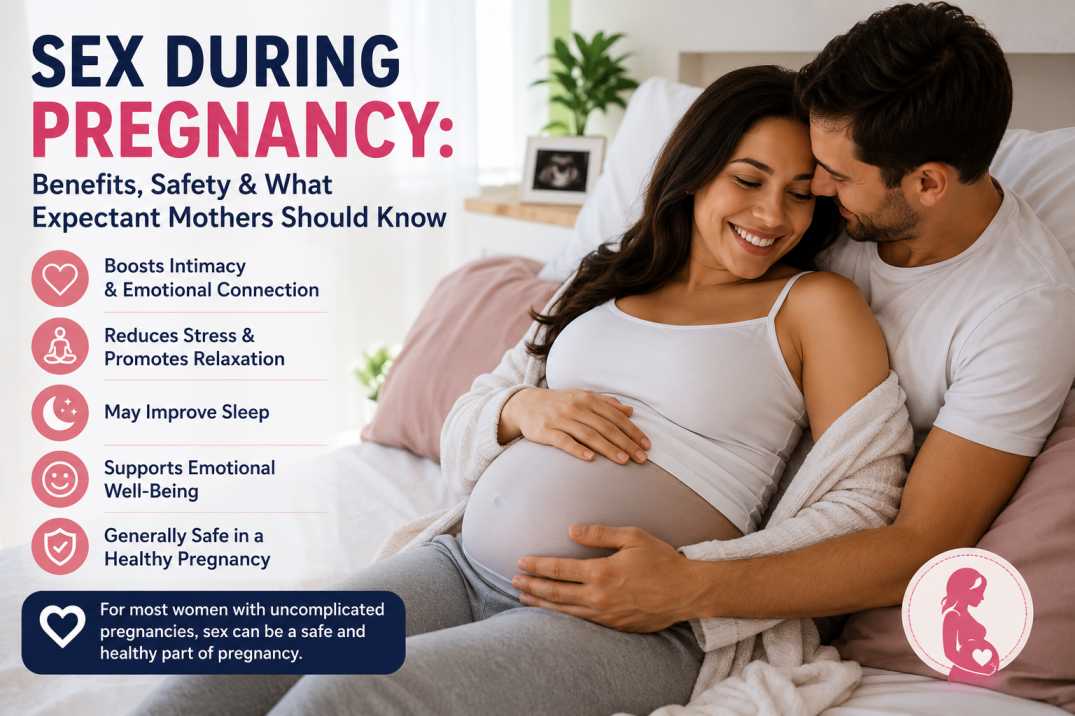
For women with a healthy, uncomplicated pregnancy, however, sexual activity is generally considered safe throughout pregnancy. The baby is protected by the amniotic fluid and the strong muscles of the uterus, and sex does not normally cause miscarriage.
Beyond intimacy and pleasure, sex may also provide several physical and emotional benefits during pregnancy.
1. Sex Can Reduce Stress and Promote Relaxation
Pregnancy can be an emotionally demanding period. Changes in the body, concerns about childbirth, financial pressures, and preparing for a baby can all contribute to stress.
Sexual activity and orgasm can promote relaxation and may help some women feel calmer and emotionally connected to their partners. Physical affection can also strengthen intimacy at a time when pregnancy may otherwise change a couple’s relationship.
2. It May Help Improve Sleep
Getting enough sleep during pregnancy can be difficult, particularly as the pregnancy progresses.
Sex and orgasm may leave some women feeling relaxed and sleepy. This can make it easier to wind down before bedtime, although it should not be considered a treatment for pregnancy-related insomnia.
3. Sex Can Support Emotional Well-Being
Pregnancy hormones can affect mood, while physical changes may sometimes make women feel less confident about their bodies.
Consensual, pleasurable intimacy can provide affection, closeness, and reassurance. For some couples, maintaining intimacy during pregnancy can strengthen their emotional connection and help them adjust to the transition into parenthood.
However, sex should never be used as an obligation or a requirement for maintaining a relationship. Consent and comfort remain essential.
4. It Provides Gentle Physical Activity
Sex involves physical movement and can contribute modestly to overall physical activity. For most women with uncomplicated pregnancies, normal sexual activity is not considered harmful.
However, sexual activity should not replace recommended pregnancy exercise. Women should follow their healthcare provider’s advice about appropriate physical activity during pregnancy.
5. It Can Help Maintain Intimacy as the Body Changes
Pregnancy can change how couples communicate and connect physically. As the abdomen grows, some traditional sexual positions may become uncomfortable.
Finding comfortable ways to maintain intimacy can help couples remain emotionally connected. Intimacy does not have to mean intercourse; cuddling, kissing, massage, and other forms of affection can also provide closeness.
6. Orgasms May Cause Temporary Uterine Contractions
An important fact that often worries pregnant women is that orgasm can cause temporary uterine contractions.
In an uncomplicated pregnancy, these contractions are usually harmless and do not mean that labor has begun. Some women may experience mild cramping or spotting after sex or orgasm.
However, heavy bleeding, severe or persistent abdominal pain, or other concerning symptoms should be medically evaluated.
7. Sex Does Not Normally Harm the Baby
One of the biggest misconceptions about pregnancy is that intercourse can physically injure the baby.
In a normal pregnancy, the developing baby is protected inside the uterus by the amniotic fluid and uterine muscles. Intercourse does not normally reach or harm the baby.
Sex during pregnancy also does not normally cause miscarriage. Most miscarriages occur because the pregnancy is not developing normally, particularly because of chromosomal abnormalities.
When Should Pregnant Women Avoid Sex?
Although sex is safe for most women during pregnancy, there are circumstances in which a healthcare professional may recommend avoiding intercourse.
These can include:
- Vaginal bleeding
- Leakage of amniotic fluid
- Placenta previa, where the placenta covers the cervix
- Cervical problems involving early opening of the cervix
- A history or signs of preterm labor
- Certain other pregnancy complications
Your obstetrician or midwife can advise whether sexual activity is appropriate for your particular pregnancy.
What About Sexually Transmitted Infections?
Pregnancy does not protect against sexually transmitted infections (STIs). An STI can create serious health problems for both mother and baby.
If there is a risk of an STI—for example, with a new partner or when either partner has other sexual partners—appropriate protection and testing are important.
What If Pregnancy Has Reduced Your Sex Drive?
There is no “correct” level of sexual desire during pregnancy.
Morning sickness, fatigue, breast tenderness, hormonal changes, anxiety, and physical discomfort can all reduce interest in sex. For others, pregnancy may increase sexual desire.
Neither response is abnormal.
If intercourse becomes uncomfortable, couples can explore other forms of intimacy. Communication is particularly important: pregnancy should never be a reason for a woman to feel pressured into sexual activity.
The Bottom Line
For most women with uncomplicated pregnancies, sex can be a safe and enjoyable part of pregnancy. It may promote relaxation, emotional connection, intimacy, and general well-being, while also helping couples maintain their relationship during a major life transition.
But pregnancy is not the same for everyone. If you have bleeding, leaking fluid, placenta problems, a history of preterm labor, or another pregnancy complication, speak with your healthcare provider before having sex.
Sex during pregnancy should be about mutual consent, comfort, safety, and connection—not pressure.