

Cholera Alert: NCDC Places 10 States on High Risk as Heavy Rains Approach
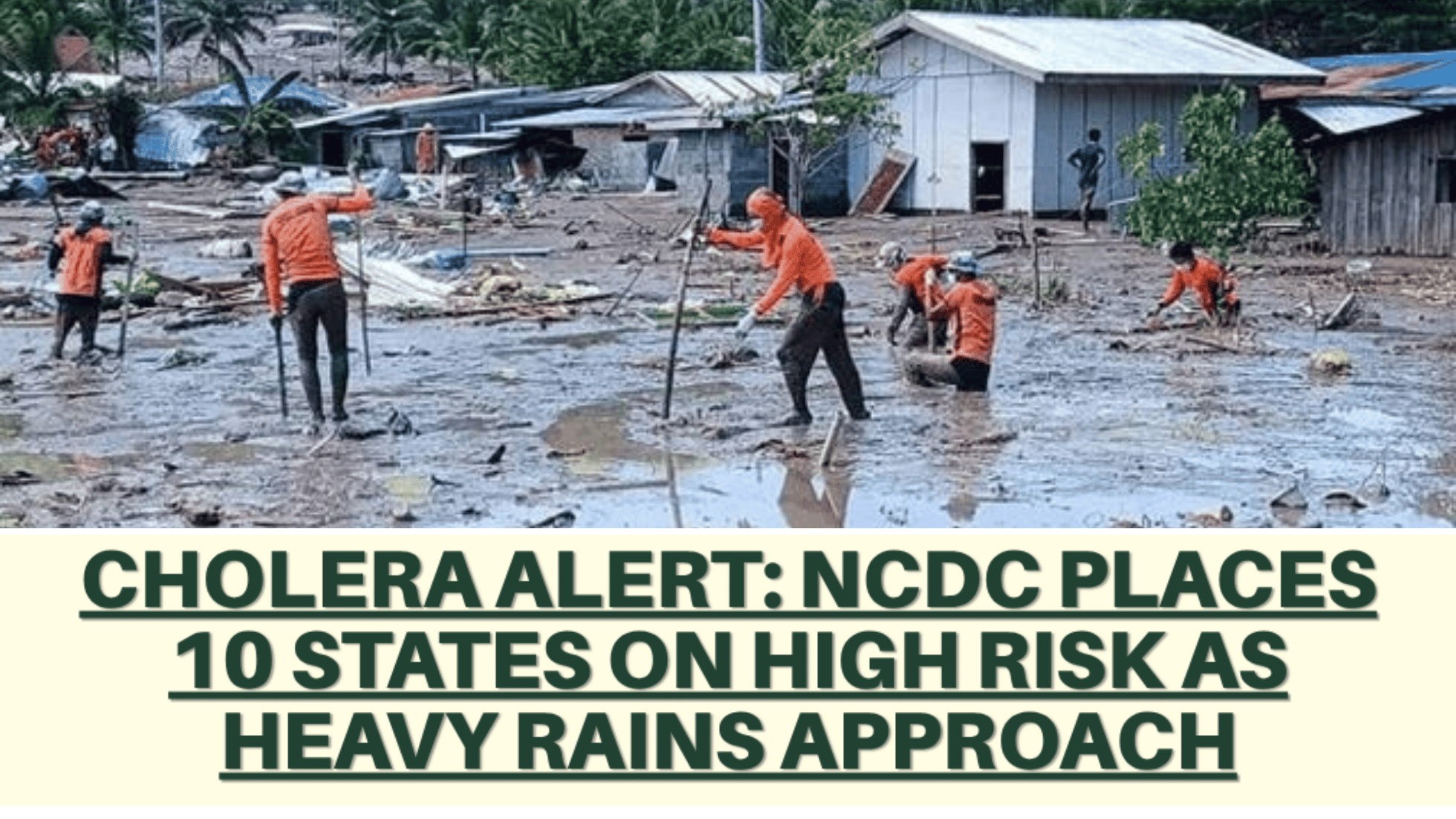
The Nigeria Centre for Disease Control and Prevention (NCDC) has issued an urgent public health advisory, placing 10 states on high alert for potential cholera and other disease outbreaks following forecasts of heavy rainfall and flooding
In a statement released Wednesday, NCDC Director-General Dr. Jide Idris warned that Adamawa, Enugu, Kaduna, Kogi, Niger, Osun, Oyo, Plateau, Taraba, and Kwara States are projected to experience intense rainfall between April 13 and 17, 2026, according to projections from the Federal Ministry of Environment and the Nigerian Meteorological Agency (NiMet).
“These forecasts are particularly concerning because they coincide with the period when cholera transmission typically accelerates,” Dr. Idris stated. “Flooding can contaminate water sources and disrupt sanitation systems, creating conditions for rapid spread.”
Why Cholera Risk Rises During the Rainy Season
Cholera, an acute diarrheal infection caused by ingestion of food or water contaminated with the bacterium Vibrio cholerae, spreads more easily when floodwaters mix with sewage, overwhelm waste management systems, or compromise access to clean water.
Data from previous outbreaks in Nigeria demonstrate that flood-prone states often record spikes in cholera cases during the rainy season, particularly in communities with limited access to potable water and poor sanitation infrastructure.
Early surveillance data already indicate increasing cholera infections across several states, underscoring the urgency of preventive action. Beyond cholera, the NCDC warned that the affected regions also face heightened risks of other diarrheal diseases, mosquito-borne infections like malaria, injuries from floodwaters, and disruptions to healthcare access—especially in rural and underserved areas.
Preventive Measures Urged for Residents
The NCDC emphasized that these health risks are largely preventable through community-level action and individual precautions. Residents in the 10 high-risk states are advised to:
- Drink only safe water—boiled, chlorinated, or from verified protected sources
- Maintain rigorous hand hygiene, especially before eating and after using the toilet
- Avoid direct contact with floodwaters, which may contain harmful pathogens
- Store food properly and ensure meals are thoroughly cooked
- Use insecticide-treated mosquito nets to reduce malaria risk
- Seek immediate medical care if symptoms such as watery diarrhoea, vomiting, or fever develop
Call for Community and Government Action
Dr. Idris called on community leaders, local authorities, and state governments in the affected regions to intensify environmental sanitation efforts, including clearing blocked drainage systems and promoting hygiene awareness at the grassroots level.
“Community-level action is critical. Early reporting of suspected cases and dissemination of accurate health information will go a long way in preventing outbreaks,” he added.
The NCDC confirmed it is working closely with state ministries of health to strengthen disease surveillance systems, improve emergency preparedness, and support rapid response mechanisms in high-risk areas.
State governments have been advised to activate multisectoral emergency frameworks, particularly focusing on water, sanitation, and hygiene (WaSH) services.
Nigeria’s recurring cycle of seasonal flooding—driven by climate variability, rapid urbanization, and inadequate drainage infrastructure—continues to pose significant public health challenges.