




Trapped in the Dark: The Incredible True Story of the Thai Cave Rescue That Captivated the World
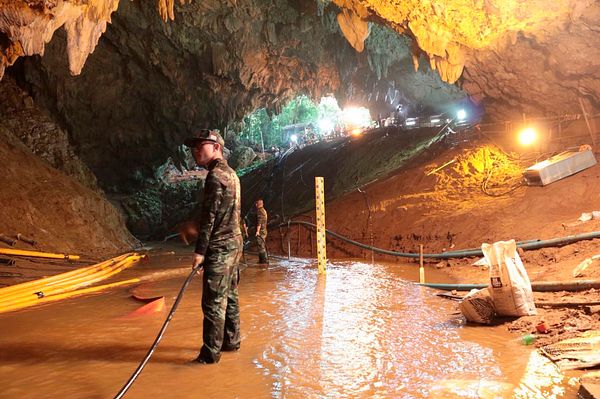
In June 2018, a routine adventure turned into a global drama when 12 boys and their soccer coach became trapped deep inside a flooded cave in northern Thailand. What followed was one of the most complex, dangerous, and inspiring rescue operations in modern history, a story of courage, international cooperation, and human resilience.
How It Began: A Team That Didn’t Come Home
On June 23, 2018, the Wild Boars, a youth soccer team aged 11 to 16 from Chiang Rai province, entered the Tham Luang Nang Non cave after practice. Accompanied by their 25-year-old assistant coach, Ekkapol “Ek” Chantawong, they planned a short exploration.
But heavy monsoon rains suddenly flooded the cave’s narrow passages, blocking their exit. For nine long days, they were missing, feared dead by many.
The Discovery: A Miracle in the Darkness
Against all odds, on July 2, 2018, two British cave divers—John Volanthen and Rick Stanton—found the boys and their coach alive on a muddy ledge 4 kilometers (2.5 miles) inside the cave, 800 meters underground.
The moment was captured on video:
“How many of you?” asked Stanton.
“Thirteen,” replied a boy in the dark.
“Brilliant!” came the relieved reply.”
The world breathed a sigh of relief, but the hardest part was just beginning.
The Challenge: A Race Against Time
The cave was still flooding. Oxygen levels were dropping. Rain was forecast to worsen. Experts agreed: waiting for the monsoon to end, up to four months, was not an option.
Three risky options were considered:
- Drilling through the mountain to reach them (too slow, too uncertain).
- Teaching the boys to scuba dive through treacherous, narrow, flooded tunnels (nearly impossible for non-swimmers).
- Sedating them and diving them out is an unprecedented, high-risk medical gamble.
The Rescue: Divers, Doctors, and Global Unity
Over three days, July 8 to 10, 2018, an international team of more than 10,000 people executed the mission:
- Elite cave divers from Thailand, the UK, Australia, the U.S., China, and Europe
- Thai Navy SEALs, including Saman Kunan, a former SEAL who tragically died during the operation while delivering air tanks
- Doctors who developed a special sedative protocol to keep the boys calm and still during the dive
- Engineers who pumped over 1 billion liters of water out of the cave
- Volunteers who built pipelines, cooked meals, and supported logistics
Each boy was fitted with a full-face mask, given a sedative, and guided through pitch-black, twisting underwater passages by two divers, one in front, one behind. The journey took up to five hours per child.
Miraculously, all 13 were rescued safely.
The boys and the coach were hospitalized but recovered fully. They later ordained as Buddhist novices in honor of Saman Kunan, whose sacrifice became a national symbol of heroism.
The rescue highlighted the power of global collaboration: no single country could have done it alone. It also sparked debates about cave safety, youth supervision, and the ethics of high-risk rescues.
In 2021, the story was adapted into the Netflix documentary “The Rescue” and Hollywood film, “Thirteen Lives” (2022), directed by Ron Howard.
Why This Story Still Matters
The Thai cave rescue wasn’t just about survival; it was about humanity at its best. Strangers from across the world dropped everything to save children they’d never met. Divers risked their lives. Scientists innovated under pressure. And a quiet coach, Ek, kept his team alive by teaching them meditation and sharing what little food they had.
In a world often divided, the Tham Luang rescue remains a shining reminder: when people unite with compassion and courage, even the impossible becomes possible.