




Activist Sowore’s Terrorism Allegations Spark Debate Amid Nigeria’s Security Crisis
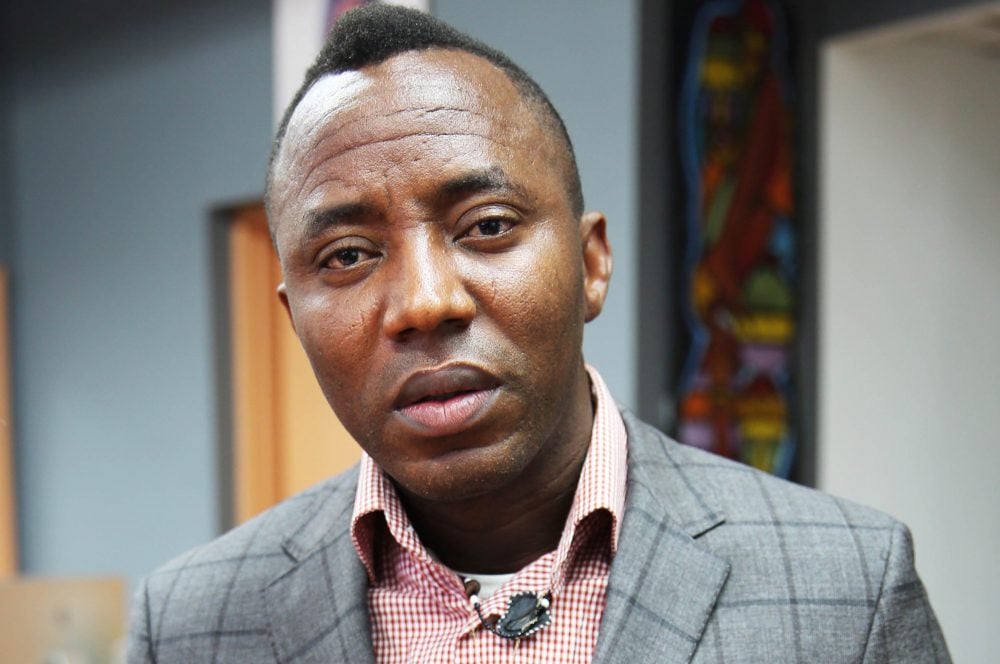
Nigerian activist Omoyele Sowore has reignited public discourse on counterterrorism with explosive allegations that the Federal Government “hired opposing terrorists to go and fight themselves” and that security agencies are compromised, a claim that has drawn both support from critics of government security policy and sharp rebukes from officials who call it unsubstantiated.
Sowore, founder of Sahara Reporters and a perennial government critic who has faced multiple arrests by the Department of State Services (DSS), made the remarks during a recent social media broadcast reacting to escalating violence in Nigeria’s northwest and northeast regions.
His comments come as Nigeria ranked sixth globally on the 2025 Global Terrorism Index, with over 7,000 fatalities attributed to terrorist violence in the past year alone.
The Allegations in Context
Sowore’s specific claims—that the government only responds to terrorism when politically expedient and that the DSS colludes with terrorist elements—represent some of the most serious accusations leveled against Nigeria’s security architecture in recent years.
However, no public evidence, judicial findings, or independent investigations have substantiated the claim that Nigeria’s government hired rival terrorist factions to fight one another.
What is documented: Nigeria faces complex, overlapping security crises. Boko Haram and its splinter faction ISWAP continue insurgent operations in the northeast, while banditry and kidnapping plague the northwest.
In December 2025, the U.S. Africa Command conducted airstrikes against ISIS camps in Sokoto State—a move President Donald Trump later characterized controversially as a “Christmas present” to the terror group.
Trump’s administration had previously threatened humanitarian intervention in Nigeria over terrorism concerns, lending partial credence to Sowore’s observation about international pressure influencing government action.
Government Response and Counterterrorism Reality
The DSS has consistently denied allegations of impropriety. In recent months, the agency has publicly dismissed various accusations of misconduct while launching internal investigations into officers accused of fraudulent activities.
Nigeria’s National Counter-Terrorism Centre launched a revised strategic plan for 2025–2030 aimed at shifting from reactive to proactive security measures.
Yet security experts acknowledge systemic challenges. The collapse of the military’s “supercamp” strategy in 2025 exposed vulnerabilities in Nigeria’s counterterrorism approach, with insurgents increasingly exploiting gaps between military operations and community policing.
Civilian casualties continue to mount—on January 4, 2026, terrorists killed approximately 30 people in a market attack in Niger State, prompting Sowore to declare there was “no president in Nigeria” given the government’s perceived inaction.
A Pattern of Distrust
Sowore’s allegations reflect deeper public frustration. Nigeria has lost thousands of citizens to terrorism since 2009, with communities in Borno, Yobe, Adamawa, Kaduna, Zamfara, and Niger states bearing disproportionate suffering.
When high-profile kidnappings affect elite families or international pressure mounts—as with Trump’s December 2025 comments—security operations often intensify visibly, fueling perceptions of selective enforcement.
“This isn’t about one man’s rhetoric,” says Dr. Amina Ibrahim, a security analyst at the University of Abuja. “It’s about a pattern where rural communities experience violence for years without meaningful state protection, while responses accelerate when political consequences emerge. That perception gap is real—even if the most extreme allegations lack evidence.”
As Nigeria grapples with one of Africa’s most persistent security challenges, the debate around Sowore’s statements reveals a painful truth: when citizens lose faith in state protection, even the most inflammatory rhetoric finds fertile ground. Whether that rhetoric reflects reality or exploits anguish remains a question demanding evidence—not amplification.