




You’re My Junior Both in Engineering and Governance,” Umahi Tells Makinde
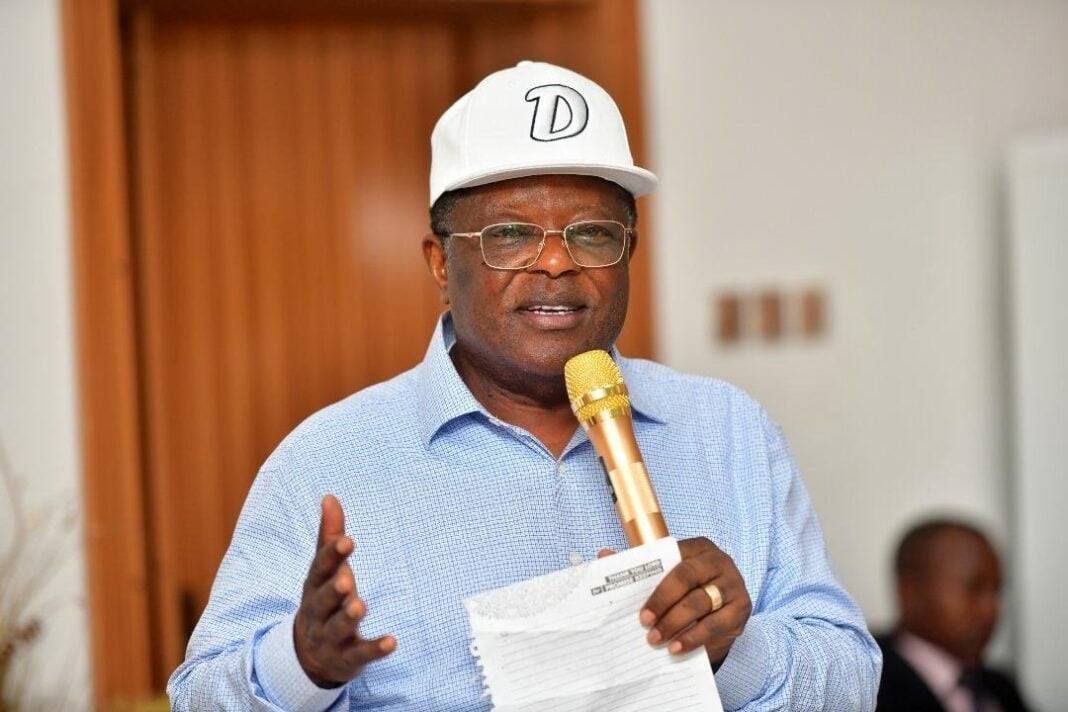


Federal Minister of Works, Engr. David Umahi has firmly pushed back against recent remarks by Oyo State Governor Seyi Makinde concerning the cost of federal road projects, asserting his seniority over the governor in both engineering practice and public administration.
Umahi made the remarks on Saturday during an inspection of the Keffi segment of the Abuja–Mararaba–Keffi road, accompanied by Nasarawa State Governor Abdullahi Sule. Responding to what he described as unwarranted criticism, the minister said, “I have great respect for governors and the Governors’ Forum. But if a governor who is far my junior in engineering and governance chooses to insult me, I will respond.”
The exchange stems from a public debate over the cost per kilometre of road construction under the current administration. Governor Makinde had questioned the pricing of federal road projects, prompting Umahi’s rebuttal.
Clarifying the financial structure of the Abuja–Mararaba–Keffi project, a 45-kilometre stretch initially budgeted at ₦73 billion under the previous administration, Umahi explained that variations in construction specifications significantly affect costs. “If you’re doing surface tracing on the shoulder versus using asphalt or concrete, the cost differs,” he noted. “It’s misleading to demand a flat ‘cost per kilometre’ without accounting for design complexity, materials, or scope changes.”
He emphasized that initial budget figures include contingencies and provisional sums that may not be fully utilized. “Only upon project completion after subtracting unused contingencies and adjusting for actual scope can you calculate a definitive average cost per kilometre,” Umahi said. “Until then, any figure cited is an estimate, not a final accounting.”
Turning directly to Makinde, Umahi questioned the governor’s technical authority to critique road engineering. “Governor Makinde is an engineer, yes, but in electrical and electronics. That discipline doesn’t apply to road construction,” he stated. “I am his senior in both governance and engineering practice. If he has questions, he should call me. I’d gladly explain out of mutual respect.”
However, Umahi took exception to Makinde’s phrasing, particularly the suggestion that he was “dancing around” the issue. “I never danced around anything,” he asserted. “If he insists on that characterization, I invite him to a public debate. That’s the proper forum.”
The minister also referenced recent public discourse involving artificial intelligence and academic credentials, noting with satisfaction that AI responses and National Universities Commission (NUC) guidelines aligned with his position. “You can earn professorial recognition through decades of field practice,” he said. “In practical engineering, what I call field engineering, I believe God has positioned me as a reference point.”
Beyond the controversy, Umahi addressed persistent traffic congestion along the Abuja–Mararaba–Keffi corridor. He stressed that a lasting solution requires collaboration with Nasarawa State, particularly the demolition of roadside shanties and illegal markets encroaching on the highway.
“During today’s inspection with Governor Sule, we agreed: if the state clears these obstructions to allow for additional carriageways, the federal government will immediately construct them,” he said. “That will eliminate bottlenecks in those sections.”
Umahi concluded by reiterating his commitment to transparency and technical integrity in public works, urging fellow leaders to engage with humility and due diligence when scrutinizing complex infrastructure projects.