




Democrats Push Back Hard as Elon Musk Labels Far Left “Party of Hate and Violence”
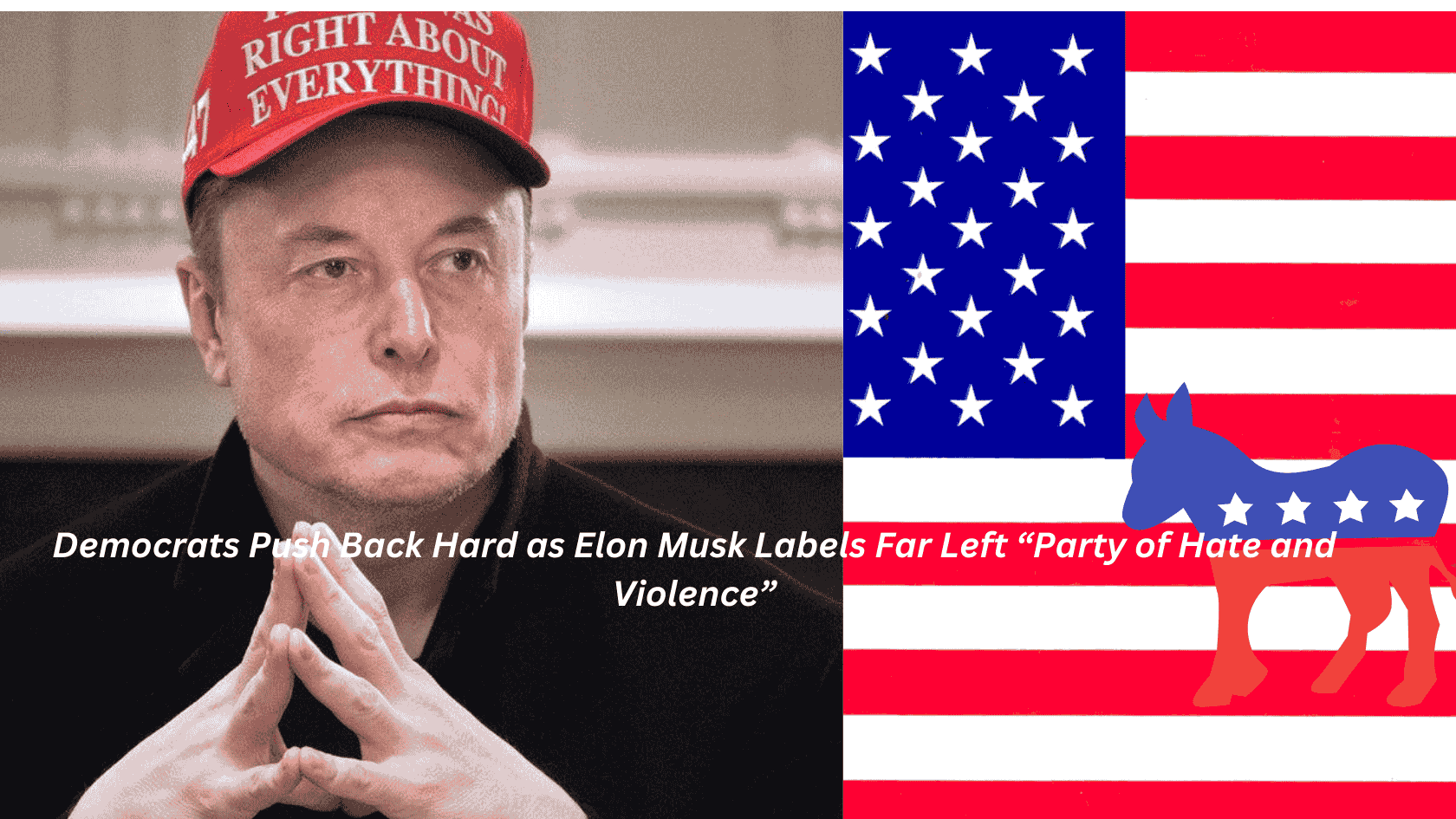
Prominent Democratic lawmakers and party figures are firing back at tech billionaire Elon Musk after he took to social media this week to declare that “the far left is the party of hate and violence.” The provocative statement, posted on X (formerly Twitter), ignited swift condemnation from Democratic leaders who accused Musk of mischaracterizing progressive values and stoking political division.
Musk, who has increasingly positioned himself as a vocal critic of what he calls “woke ideology,” did not specify which groups or individuals he was referencing. But his phrasing “party of hate and violence” was widely interpreted as a direct jab at the Democratic Party’s progressive wing, including supporters of policies like defunding the police, climate activism, and social justice reforms.
House Democratic Whip Katherine Clark (D-MA) responded swiftly: “Calling the left the ‘party of hate’ is not just inaccurate, it’s dangerous. Democrats are fighting for healthcare, living wages, and civil rights. To equate that with violence is a gross distortion.”
Senator Bernie Sanders (I-VT), often associated with the progressive left, also weighed in: “The real party of hate in America today is the one that denies climate science, restricts voting rights, and demonizes immigrants. Let’s be clear about who’s fueling division.”
Musk’s comment comes amid heightened political tensions ahead of the 2024 presidential election. The billionaire, who acquired X in 2022 and has since made sweeping changes to its content moderation policies, has become a polarizing figure praised by some conservatives for “free speech absolutism” and criticized by others for amplifying misinformation and inflammatory rhetoric.
Democratic National Committee Chair Jaime Harrison issued a statement saying, “Elon Musk may run rockets and electric cars, but he doesn’t get to redefine American values. Hate and violence have no party, but accountability does.”
Political analysts note that Musk’s rhetoric aligns with a broader conservative narrative that frames progressive activism, particularly around racial justice and gender equity, as inherently radical or destabilizing. Critics argue that such framing risks delegitimizing legitimate social movements.
Meanwhile, Musk has not walked back his comments. In a follow-up post, he doubled down: “When institutions are attacked, when dissent is silenced, and when mobs dictate policy, that’s not progress. That’s coercion.”
The White House has not issued an official response, sources said senior advisors are monitoring the fallout, wary of escalating a public feud with one of the world’s most influential and unpredictable figures.
Musk’s remarks are likely to fuel further debate over the boundaries of political speech, the role of billionaires in public discourse, and what or who truly constitutes “extremism” in American politics today.
This is a developing story. Check back for updates.