




What Science Really Says About NMN, Creatine & Brain-Boosting Foods


At 48, a software engineer began forgetting names mid-sentence. His focus frayed by the afternoon. His mood swung unpredictably. Desperate for clarity, he ordered NMN (nicotinamide mononucleotide) powder, creatine, and an array of “brain-boosting” supplements—spending hundreds of dollars in one week. Three months later? Minimal change. “I felt scammed,” he admitted. “Then my doctor explained I’d skipped the fundamentals.”
His experience mirrors a global surge in interest in brain health. Google searches for “NMN for brain fog” rose 180% in 2025, while creatine’s cognitive benefits now rival its reputation for athletic performance. Yet beneath the marketing lies nuanced science worth understanding before adding anything to your cart.
NMN: The NAD+ Connection (With Important Caveats)
NMN (nicotinamide mononucleotide) supports NAD+ production—a coenzyme essential for cellular energy, DNA repair, and mitochondrial function. NAD+ levels decline by roughly 50% between ages 40 and 60, correlating with slower cognitive processing and reduced mental resilience.
Early animal research showed promise: NMN supplementation restored NAD+ levels and improved memory in aged mice. But human evidence remains limited. A 2025 Washington University trial confirmed NMN increases NAD+ biomarkers in older adults—but cognitive improvements were modest and inconsistent across participants.
Regulatory concerns are mounting. The FDA has issued warnings to multiple NMN brands for unverified anti-aging claims, and product purity varies significantly in unregulated markets.
The reality is that NMN shows biological plausibility but isn’t a cognitive shortcut. Prioritize sleep (NAD+ regenerates during deep rest) and time-restricted eating—both naturally support NAD+ without cost or regulatory uncertainty.
Creatine: The Overlooked Cognitive Ally
Long dismissed as merely a gym supplement, creatine is gaining recognition for brain health. Your brain consumes 20% of your body’s energy—and creatine phosphate fuels rapid ATP regeneration during mental exertion.
Research reveals compelling cognitive benefits:
- Vegetarians and vegans (typically low in dietary creatine) show 20–30% improvements in memory tasks with 5g/day supplementation
- Older adults taking creatine demonstrate better processing speed and reduced mental fatigue during demanding cognitive tasks
- Emerging studies suggest neuroprotective effects against age-related cognitive decline
Unlike NMN, creatine monohydrate is extensively studied, affordable, and generally safe at 3–5g daily for most adults. It is important to stay well-hydrated, as creatine draws water into cells.
Functional Foods: The Foundation Most Overlooked
Before supplements, food matters most. Three evidence-backed categories:
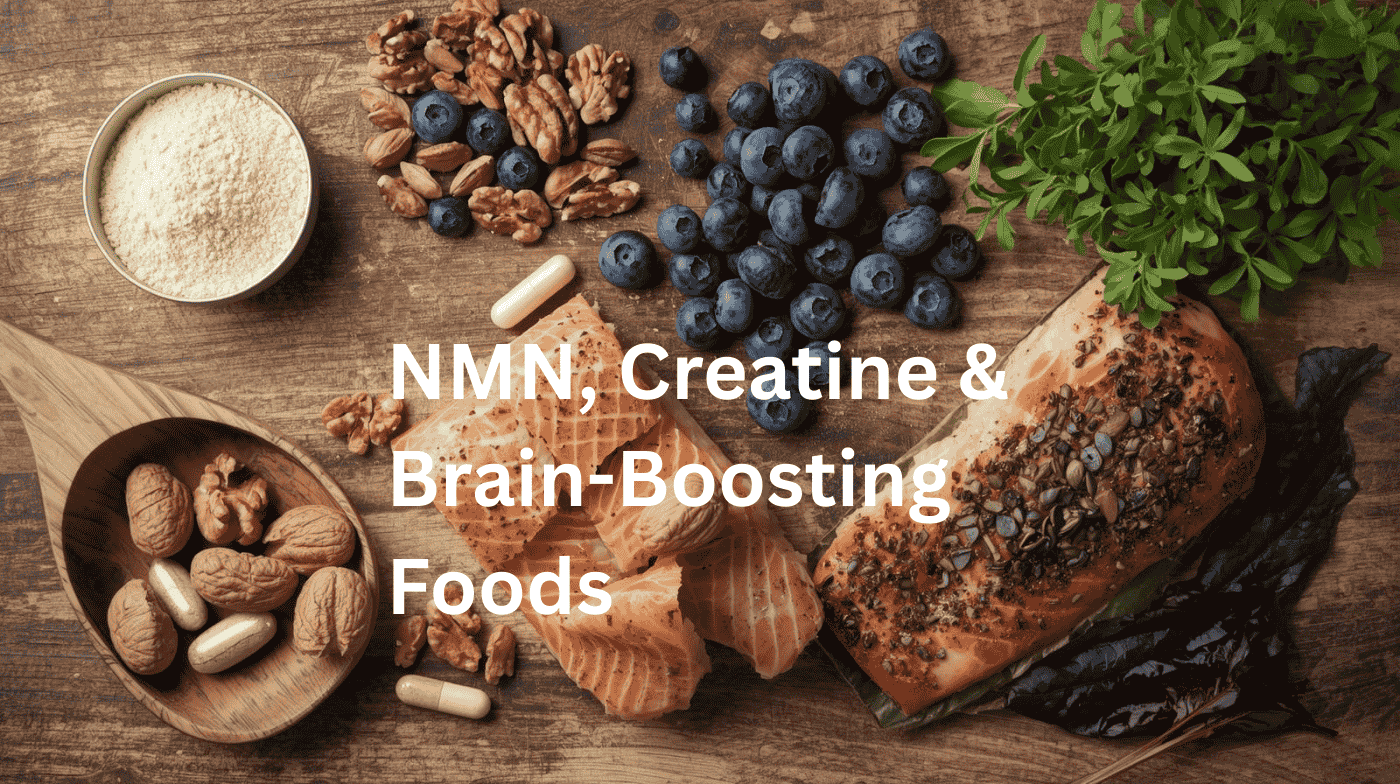
- Fatty fish & walnuts: Omega-3s (EPA/DHA) reduce neuroinflammation. Aim for two servings weekly of salmon, mackerel, or sardines. Plant-based? Walnuts and flaxseeds offer ALA, though conversion to active forms is limited.
- Dark leafy greens: Folate and vitamin K in spinach, kale, and Swiss chard support neurotransmitter production and vascular brain health.
- Fermented foods: Emerging research links gut microbiome diversity to mood regulation via the gut-brain axis. Include unsweetened yogurt, kefir, kimchi, or sauerkraut regularly.
The Way Forward
Brain health isn’t about stacking supplements—it’s about foundational habits plus targeted support.
- Prioritize 7–9 hours of quality sleep (essential for memory consolidation and toxin clearance)
- Move daily—30 minutes of brisk walking boosts BDNF (“brain fertilizer”)
- Manage chronic stress—elevated cortisol shrinks the hippocampus over time
- Then consider creatine (3–5g/day) for most adults and NMN only after consulting a healthcare provider
As one neurologist put it, “Your brain thrives on rhythm—consistent sleep, real food, and movement—not expensive powders. Supplements fill nutritional gaps; they don’t replace biological fundamentals.”
The engineer eventually shifted focus: he fixed his sleep schedule, added daily walks, and took 5g of creatine consistently. Six months later, his mental clarity stabilized. “The supplement helped,” he reflected, “but only after I stopped treating my brain like a machine needing upgrades—and started caring for it like a living ecosystem.”
Disclaimer: Consult a healthcare provider before starting NMN, creatine, or new supplements—especially if pregnant, nursing, or managing health conditions. This article provides educational information and does not replace personalized medical advice.
DISCLOSURE: As an Amazon Associate, I may earn a small commission from qualifying purchases at no additional cost if you click on an affiliate link and make a purchase. These commissions help support the maintenance and growth of this website, allowing me to continue providing valuable content to my readers.
Please note that I only recommend products or services that I believe are helpful, relevant, and of value to my audience. My opinions are genuine, and all product recommendations are based on my research or personal experience.
Thank you for being so supportive! Your trust means everything to me, and I truly appreciate your visits and purchases through these affiliate links.