


NNPC Accounting Discrepancy: Separating Fact from Viral Misinformation
Social media platforms have been flooded with claims that “₦210 trillion was diverted by NNPC” and subsequently “written off” by the Tinubu administration, a narrative that conflates separate issues and misrepresents critical financial facts currently under Senate scrutiny.
What the ₦210 Trillion Figure Actually Represents
The ₦210 trillion figure emerged not from an external auditor’s report alleging diversion but from a Senate Committee investigation into NNPC Limited’s audited financial statements covering 2017 to 2023.
The discrepancy comprises ₦103 trillion listed as “accrued expenses” and ₦107 trillion categorized as “receivables”—accounting entries that NNPC management has struggled to substantiate with verifiable documentation.
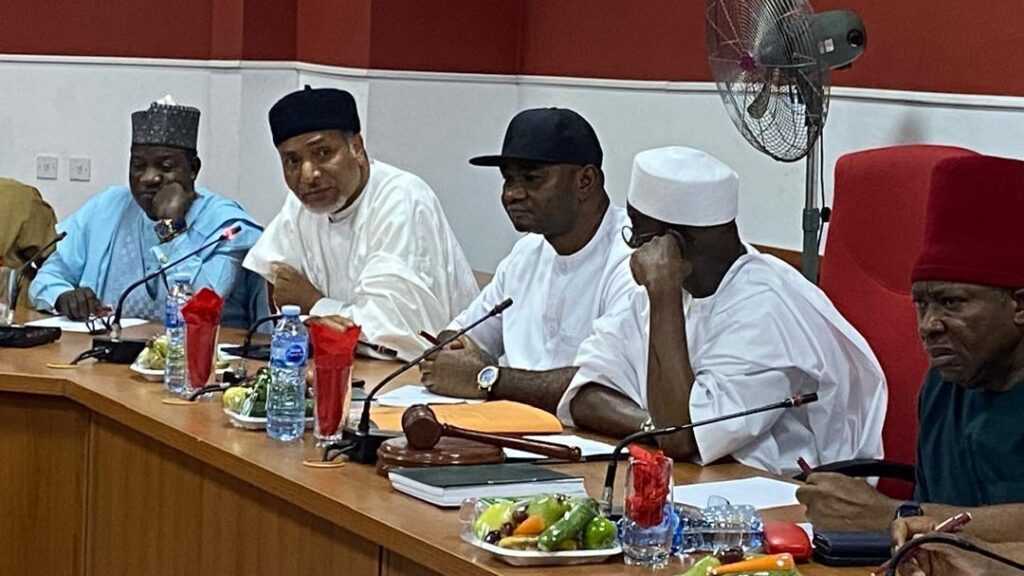
During Senate hearings, lawmakers expressed deep concern that NNPC officials could not name specific banks holding the alleged ₦107 trillion in receivables or provide supporting evidence for the massive accrued expenses.
The Senate Committee subsequently rejected NNPC’s written explanations as “unacceptable,” demanding greater transparency.
Importantly, auditors and investigators have not alleged that ₦210 trillion was “diverted” or stolen. Rather, the figure represents unexplained accounting entries requiring clarification—a significant governance concern, but fundamentally different from proven fund diversion.
The Actual Debt Write-Off
Separately, on December 29, 2025, President Bola Tinubu approved the cancellation of approximately $1.42 billion (equivalent to ₦5.57 trillion) in legacy debts owed by NNPC Limited to the Federation Account.
This write-off covered historical obligations accrued before December 31, 2024, and was framed by government officials as necessary to position the reformed NNPC Limited for commercial viability following its transition from a state corporation to a limited liability company.
This ₦5.57 trillion write-off—while substantial—represents less than 3% of the ₦210 trillion accounting discrepancy under Senate investigation. The two figures have been erroneously merged in viral social media posts, creating a misleading impression that the government “wrote off” the entire ₦210 trillion.
Context and Scale
To appreciate the magnitude: Nigeria’s entire Gross Domestic Product (GDP) in 2024 was estimated at approximately ₦240 trillion.
According to Business Day, a diversion of ₦210 trillion from a single entity would represent nearly the nation’s entire annual economic output—an economically implausible scenario that no credible audit has alleged.
Recent Auditor-General reports have identified actual financial irregularities at NNPC, including ₦514 billion in unauthorized fund diversions and over ₦60 billion in payment breaches—but these documented cases involve amounts orders of magnitude smaller than the viral ₦210 trillion claim.
Calls for Accountability
Civil society organizations and opposition lawmakers continue pressing for comprehensive forensic audits and prosecutions where wrongdoing is proven.
The Africa Democratic Congress (ADC) has challenged the constitutionality of the ₦5.57 trillion debt write-off, calling it potentially “an impeachable offense” conducted without legislative approval.
As Senate investigations continue, transparency advocates emphasize that legitimate anger over oil sector accountability must be channeled through factual discourse—not viral misinformation that, however well-intentioned, undermines credible anti-corruption efforts.