


Majority of Nigeria’s Informal Workers Too Impoverished to Bear Tax Burden – Oyedele
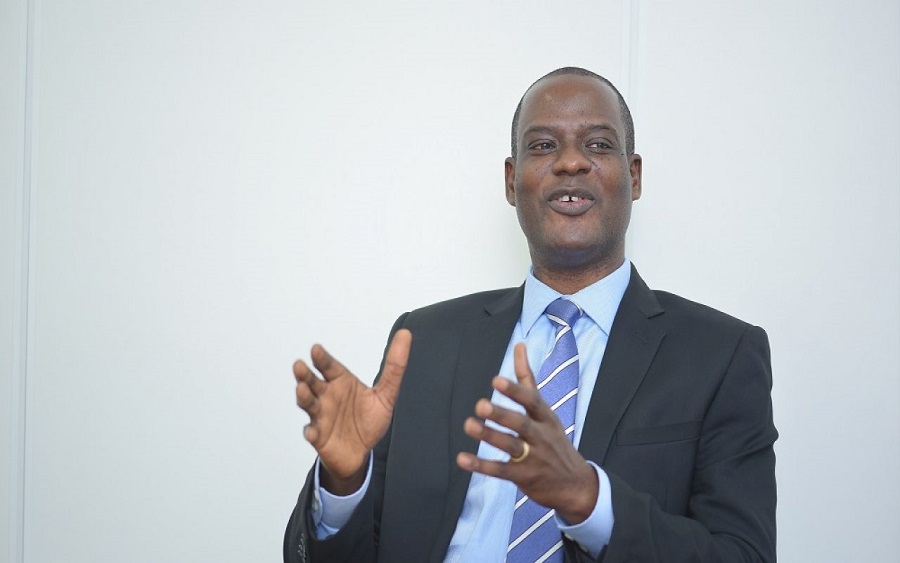
Chairman of the Presidential Fiscal Policy and Tax Reforms Committee, Taiwo Oyedele, has stated that over 90% of Nigerians working in the informal sector are too poor to afford taxation, describing their daily struggle as one of mere survival rather than profit-making.
Oyedele made the remarks during a roundtable session with journalists, policy analysts, and social influencers in Lagos on Friday, where he discussed the implications of Nigeria’s recently enacted tax reforms.
He challenged the popular notion that expanding tax collection to the informal economy would significantly boost national revenue. “This is precisely why Nigeria keeps introducing multiple taxes—we keep chasing informal workers who simply cannot pay,” he said.
Oyedele painted a vivid picture of the realities faced by street vendors, artisans, and casual laborers: “Someone roasting corn by the roadside may serve customers from morning till night, yet still live in poverty. A vulcaniser with a steady stream of clients is still struggling to feed their family. Even a wheelbarrow pusher working nonstop all day remains poor. These people are not evading taxes; they genuinely lack the means to pay.”
He emphasized that this understanding underpins President Bola Tinubu’s directive that poverty and capital must not be taxed. “We should not tax the seeds,” Oyedele remarked. “We must wait for the fruits.”
Turning to the broader tax reforms, Oyedele highlighted significant improvements in transparency, accountability, and enforcement under the new legal framework. He noted that while the Federal Inland Revenue Service (FIRS) collected more than ₦20 trillion in 2024 and is projected to exceed that figure in 2025, the focus is now on how revenue is collected, not just how much.
“The new tax laws have introduced stronger structures, clearer provisions, and stricter oversight mechanisms,” he explained. “For the first time, tax officers can face personal liability for misconduct or negligence. Agencies are now required to publish regular, detailed reports, something that wasn’t consistently done before.”
A key reform, according to Oyedele, is the mandate that all tax revenues flow directly into the Federation Account, effectively closing off informal or off-book channels that previously enabled leakage and misappropriation.
On the issue of corruption, he acknowledged that malpractice in the past involved not just officials, but also taxpayers and tax consultants. The updated laws, however, now impose consequences across the board.
“Tax evasion is now far costlier for individuals,” he said. “Consultants must register as tax agents and are monitored through the system. And for tax officers, the risks of unethical behavior have never been higher.”
Oyedele concluded that these changes mark a turning point in Nigeria’s fiscal governance. “What the FIRS is doing today—under a stronger, fairer, and more transparent legal framework, positions it to become a more effective and trusted institution from every angle,” he said. “We believe this is the right path forward.”